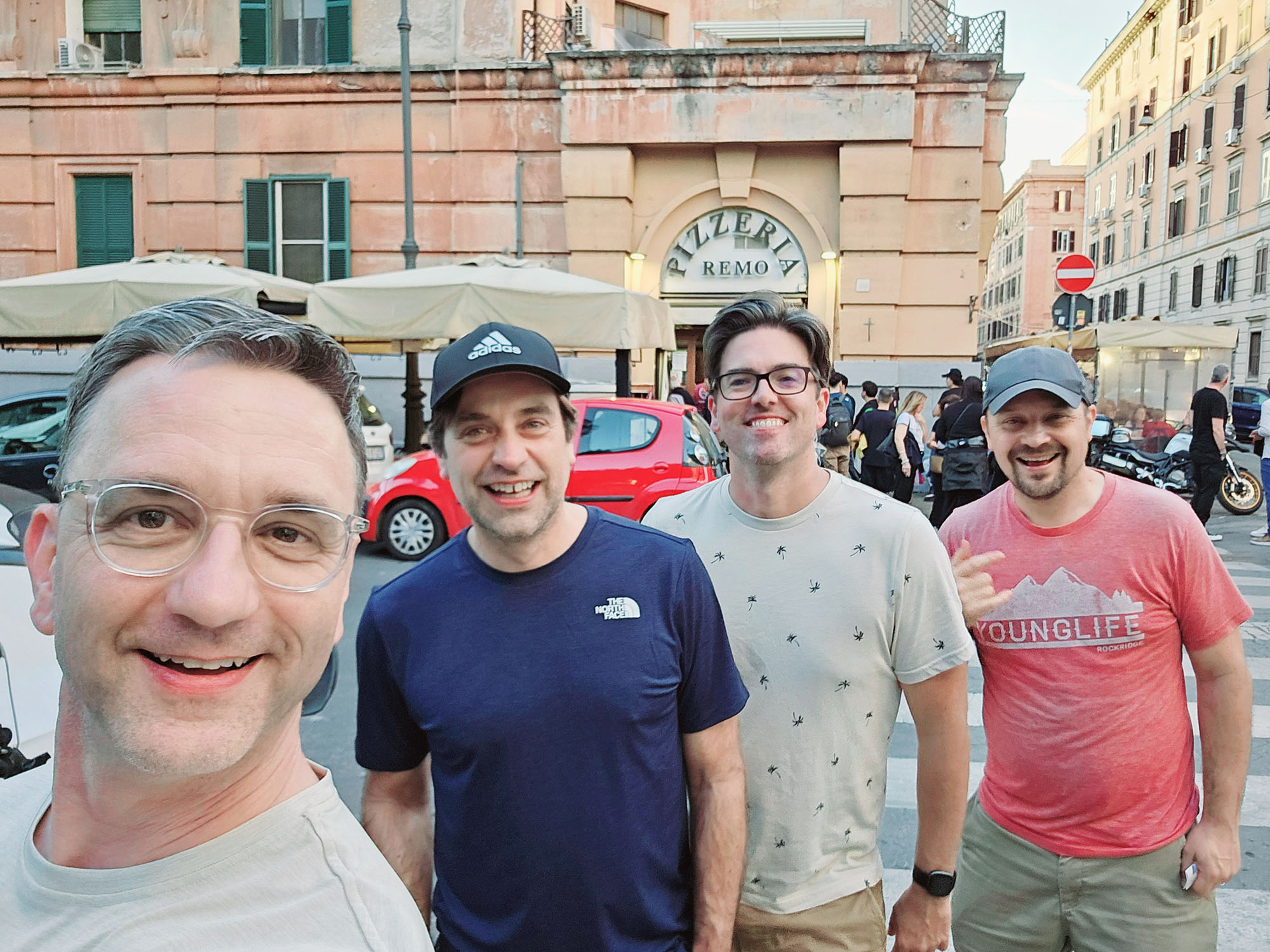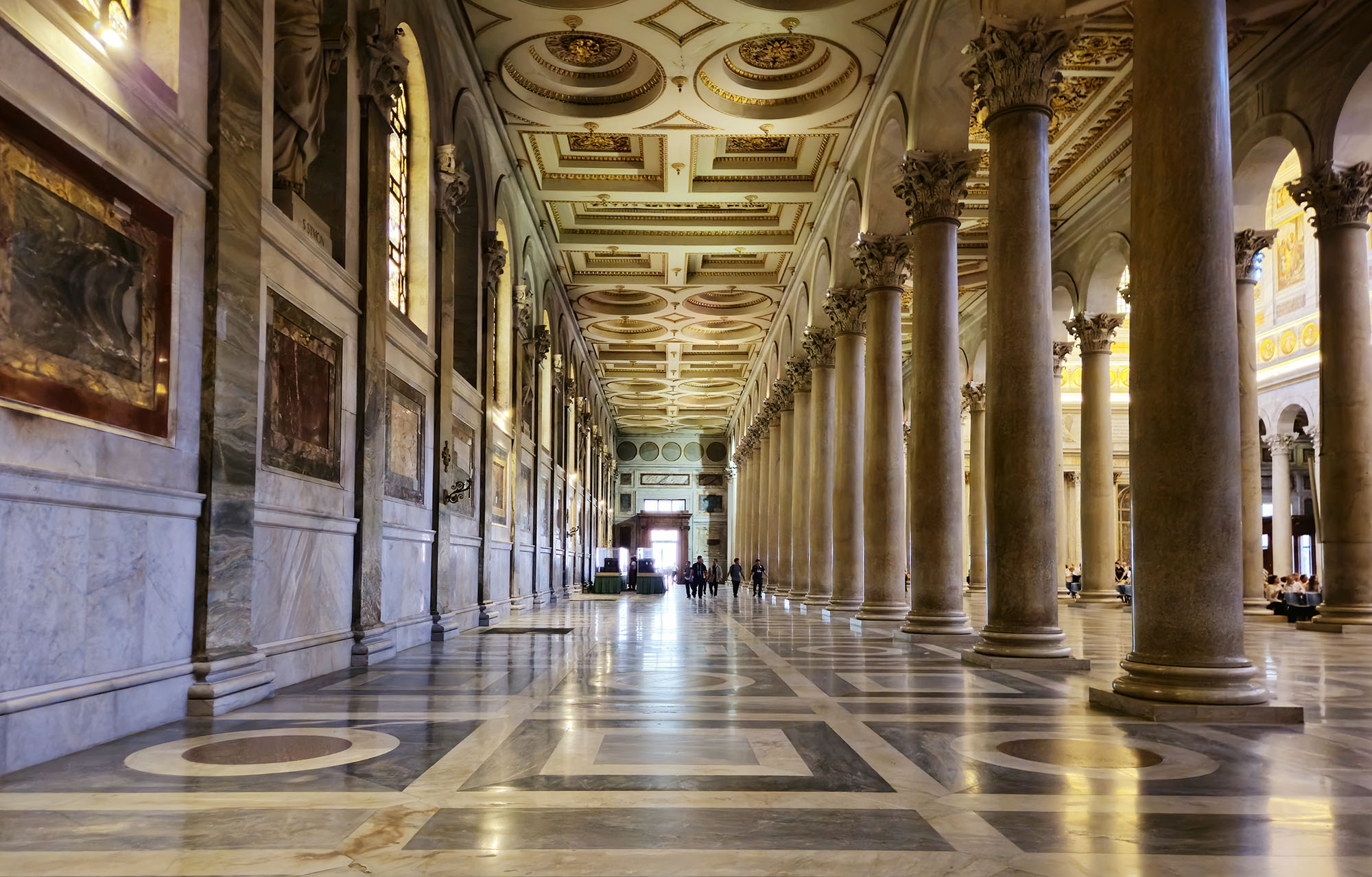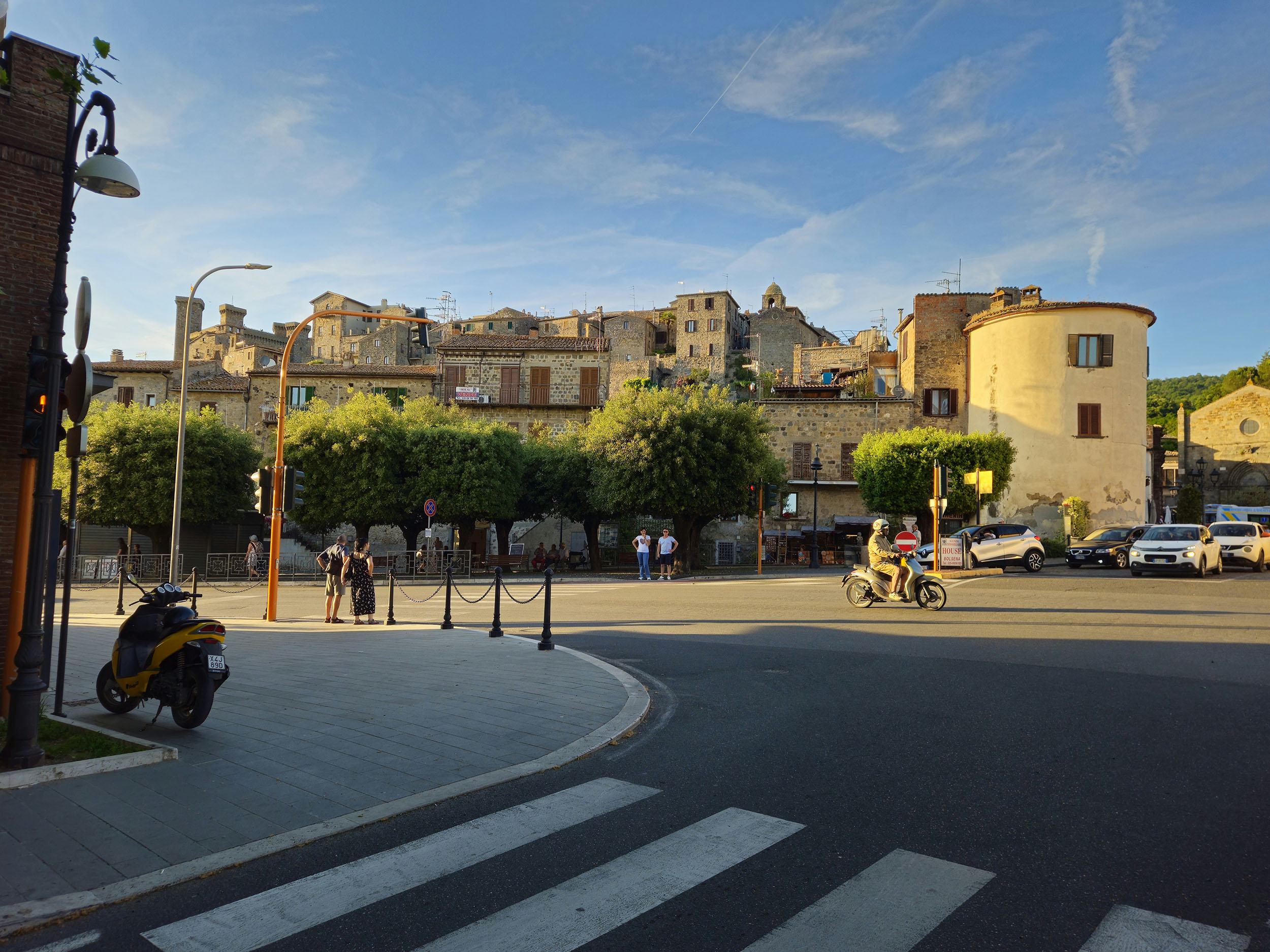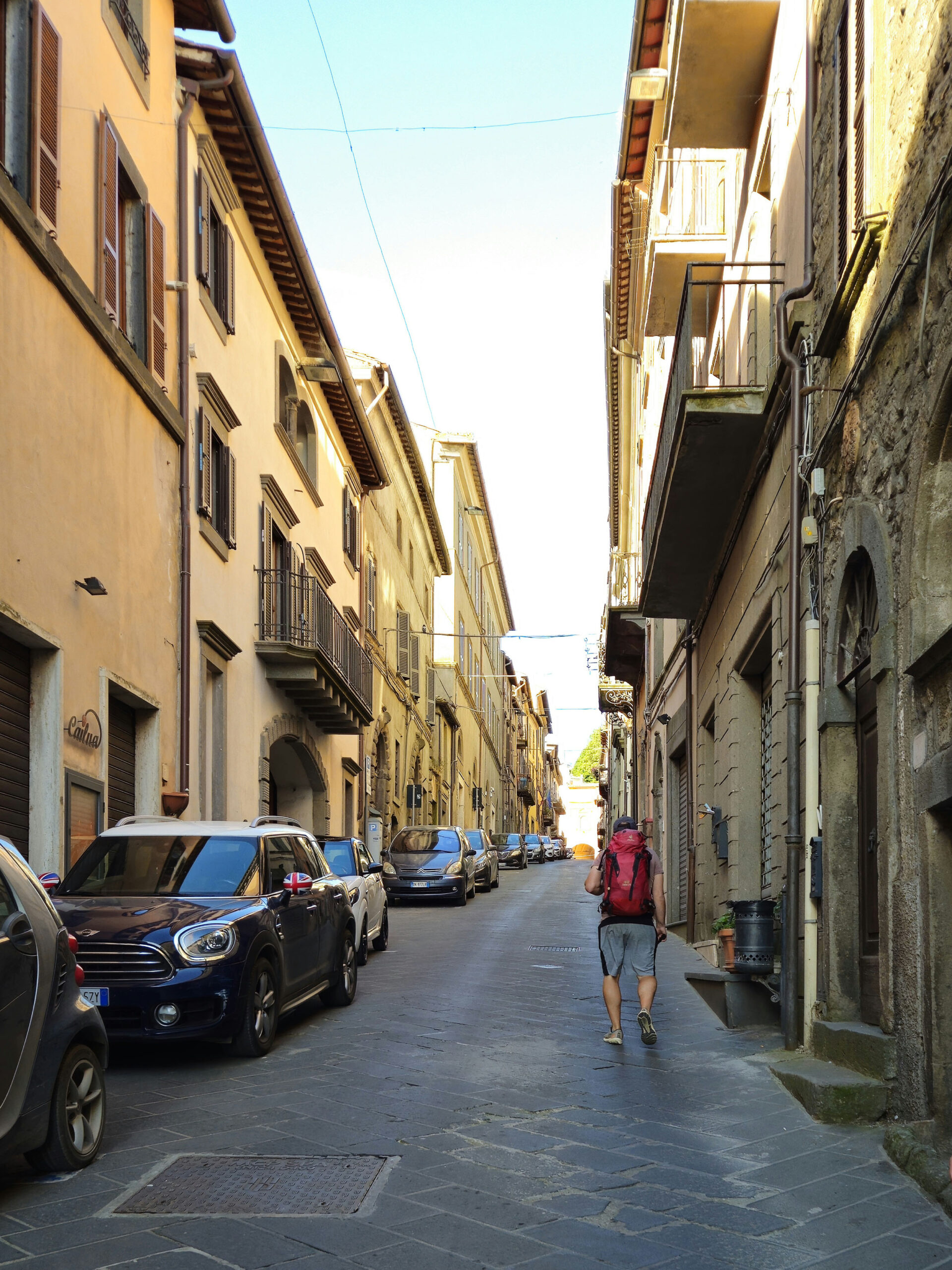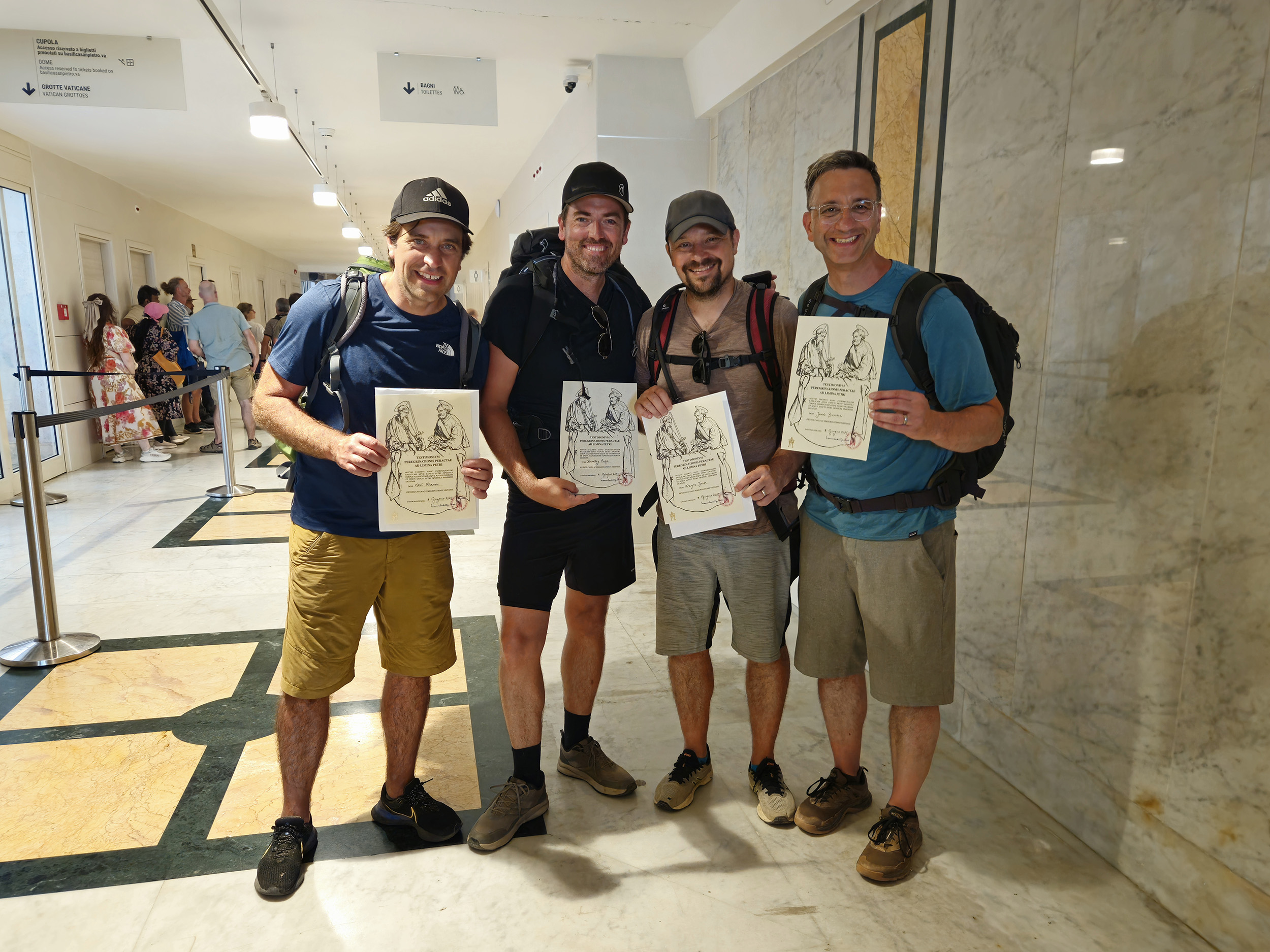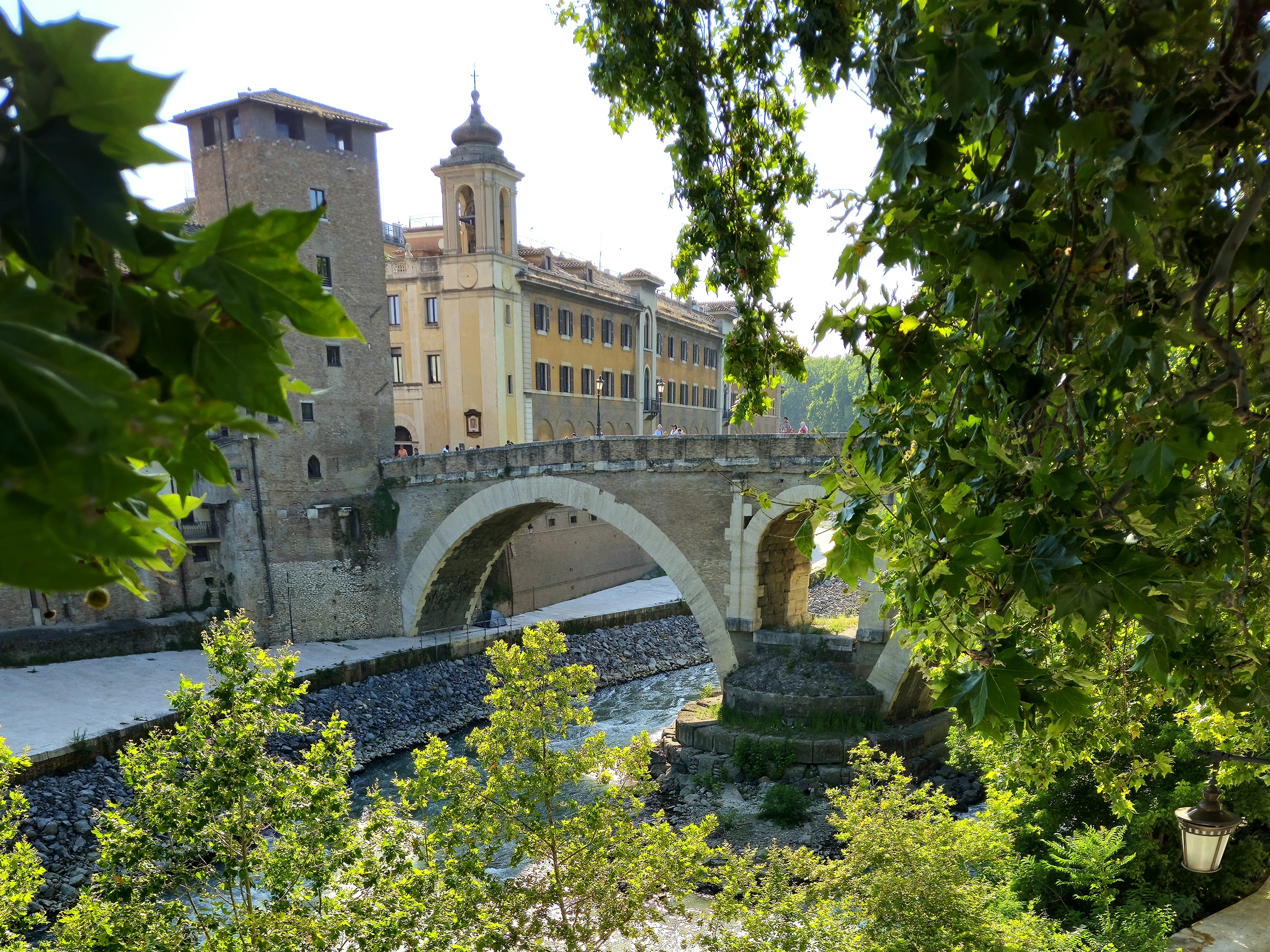
The Via Francigena traverses 2,000 km from Canterbury, England to Rome. It’s an ancient pilgrimage route similar to the Camino in Spain, but less well known. Wikipedia claims it has up to 50,000 pilgrims annually, but this seems an exaggeration. The volunteers at the Vatican mentioned that only around 20 travellers arrive from the Francigena per day.
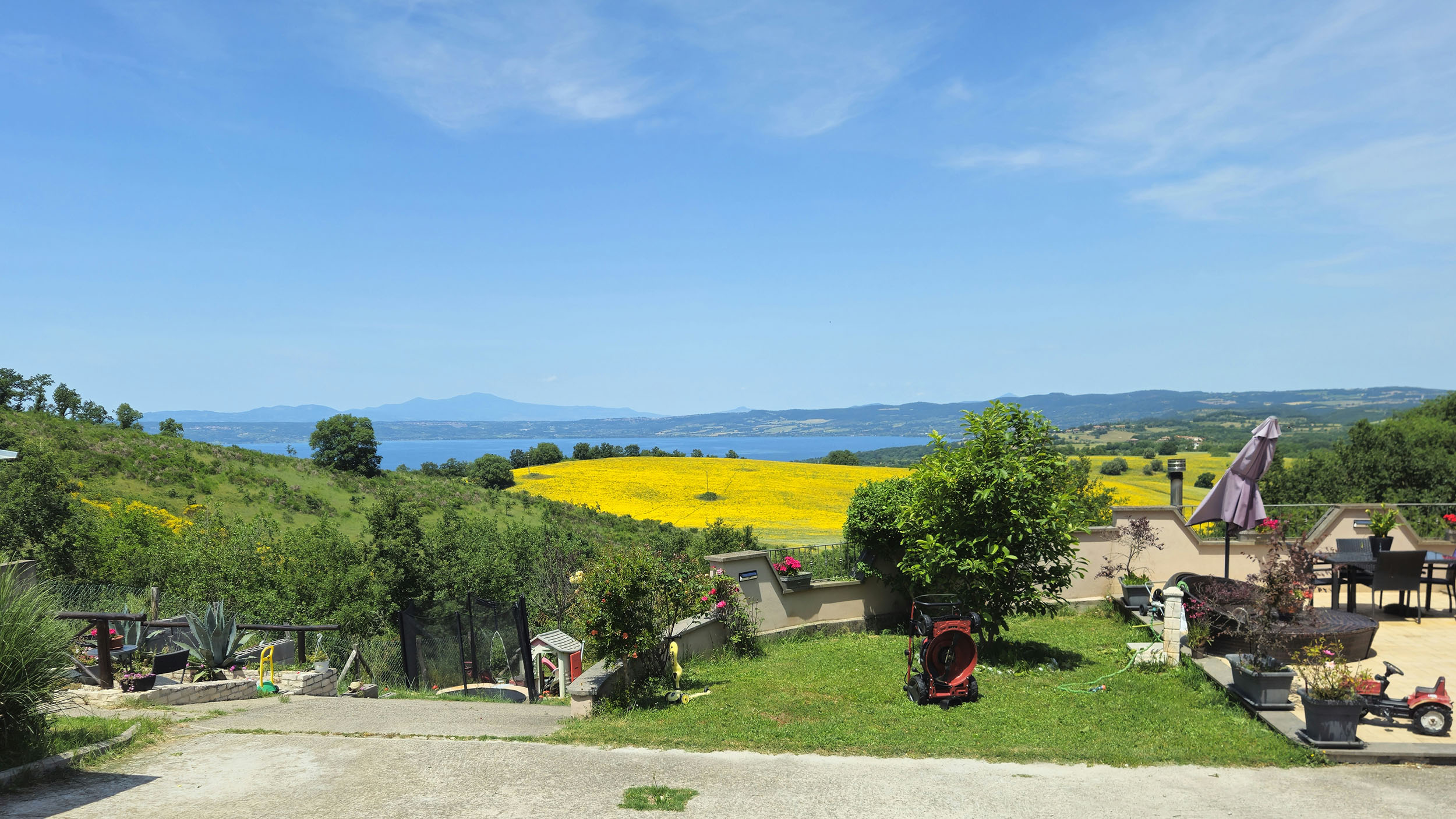
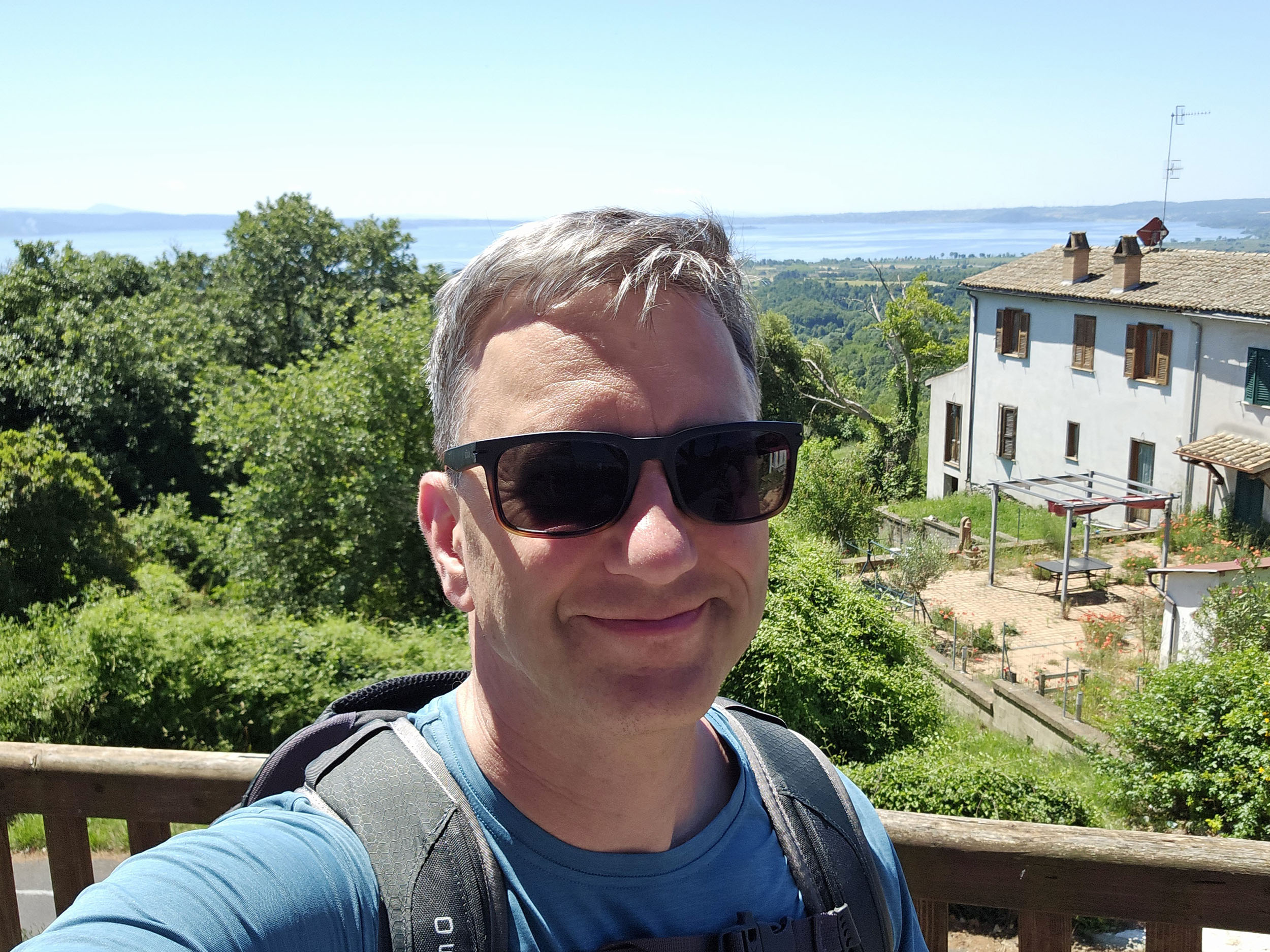
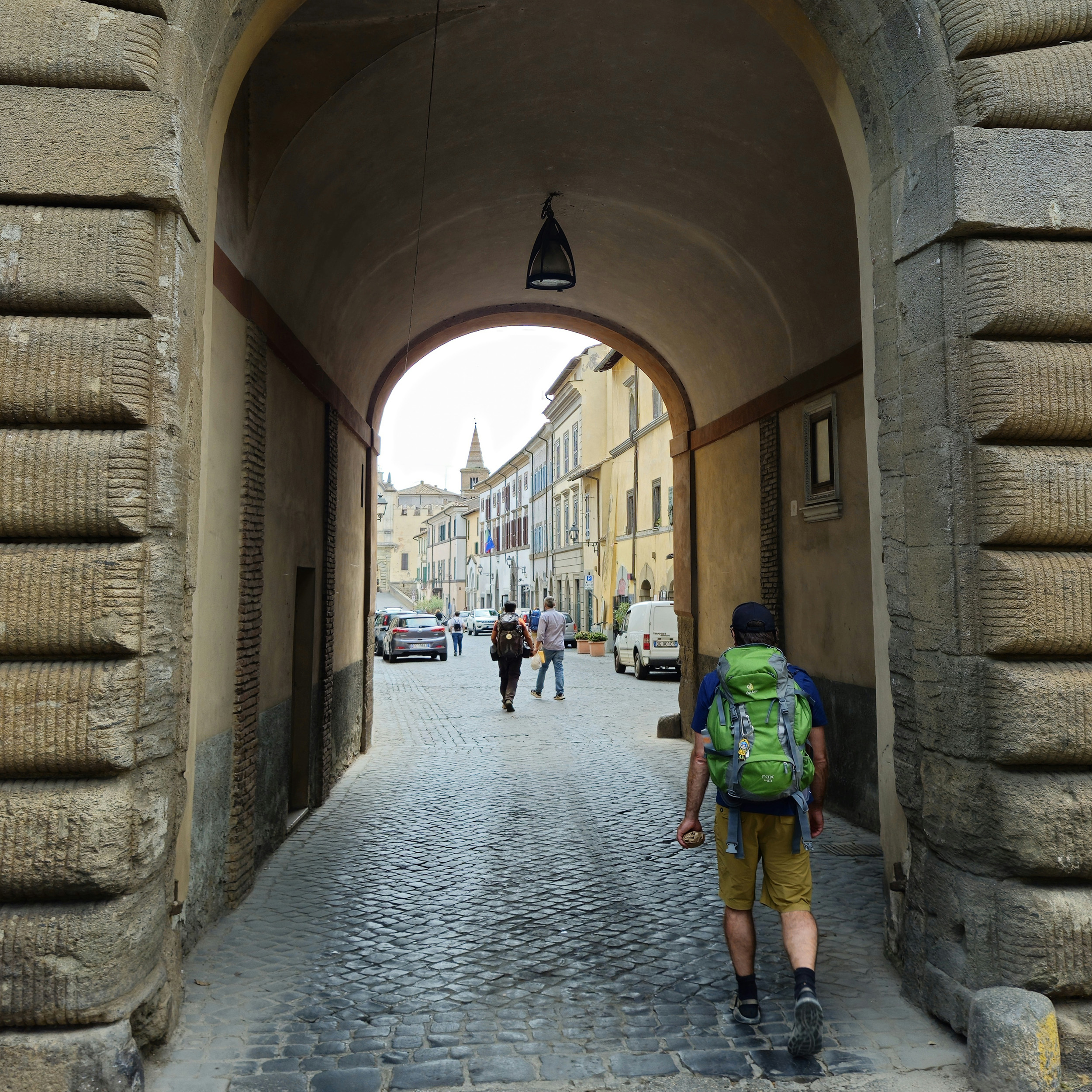
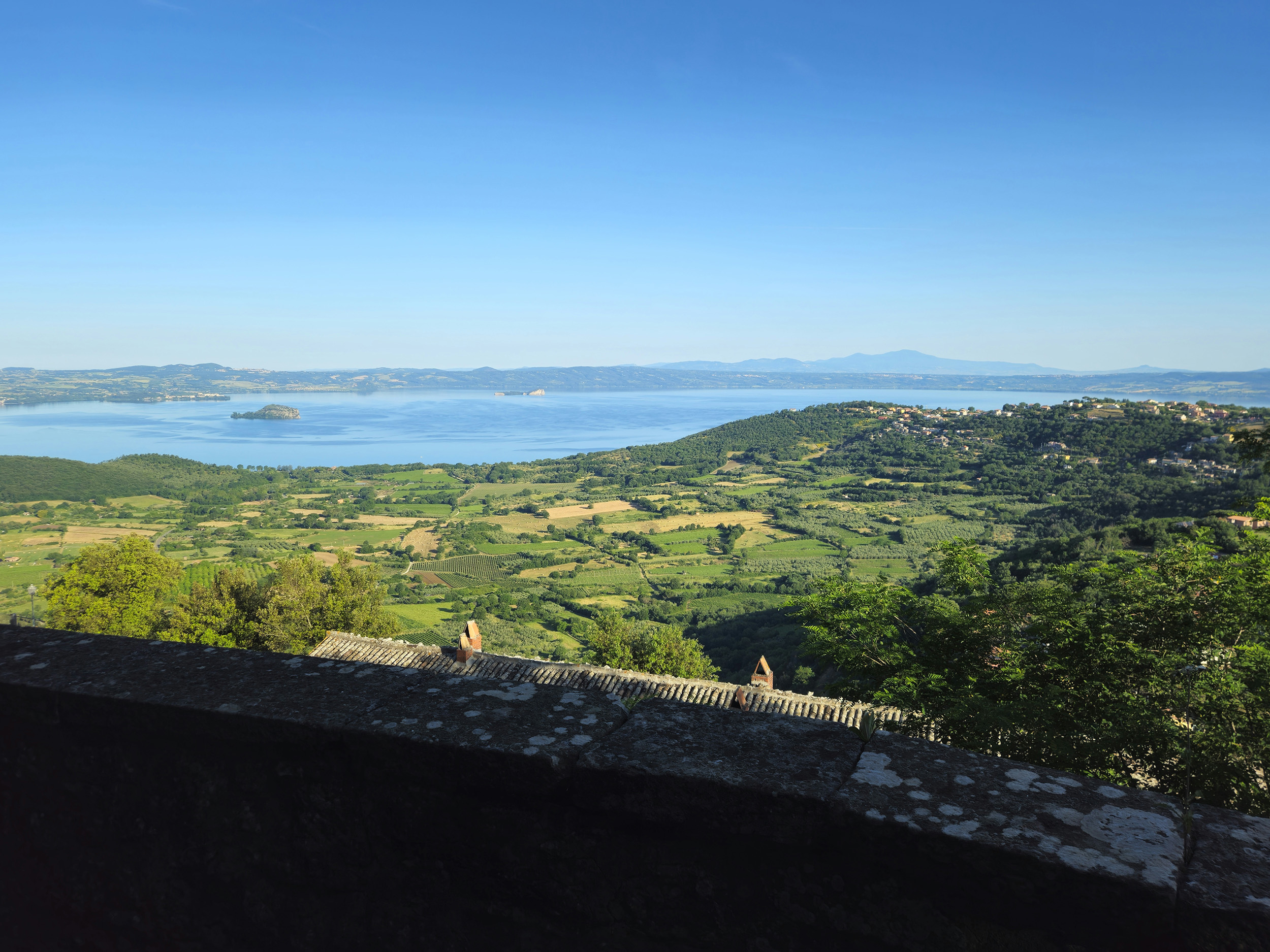
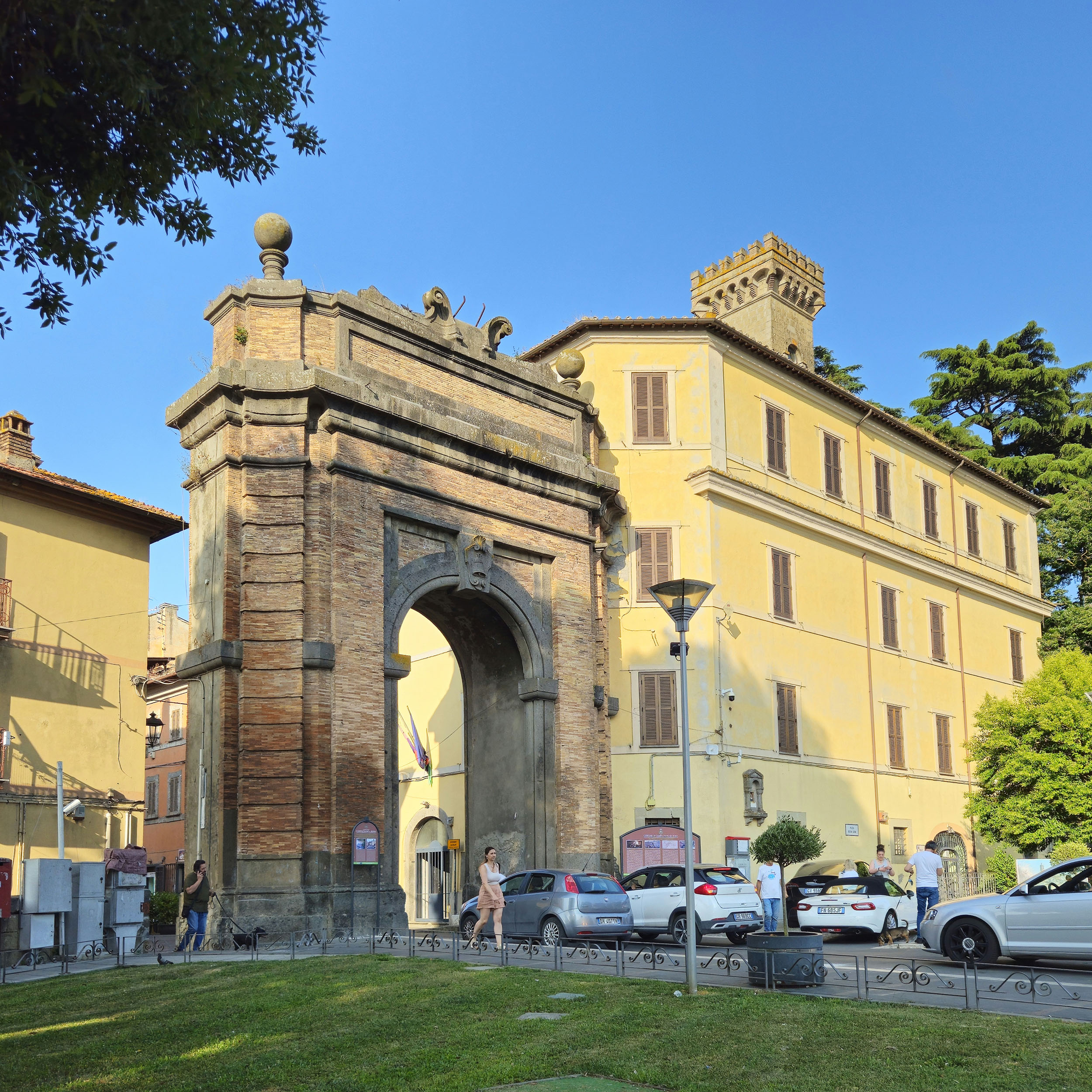
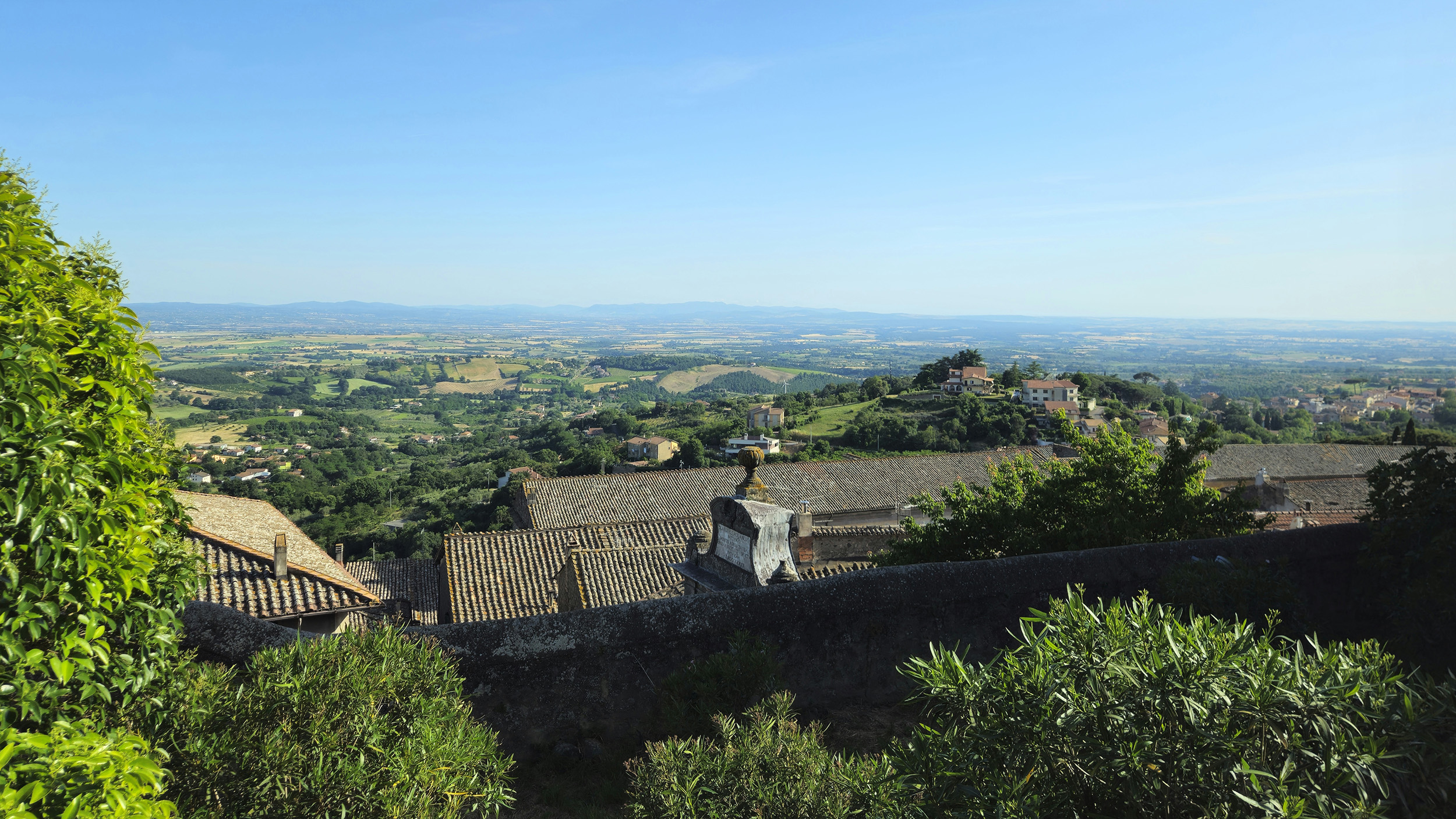
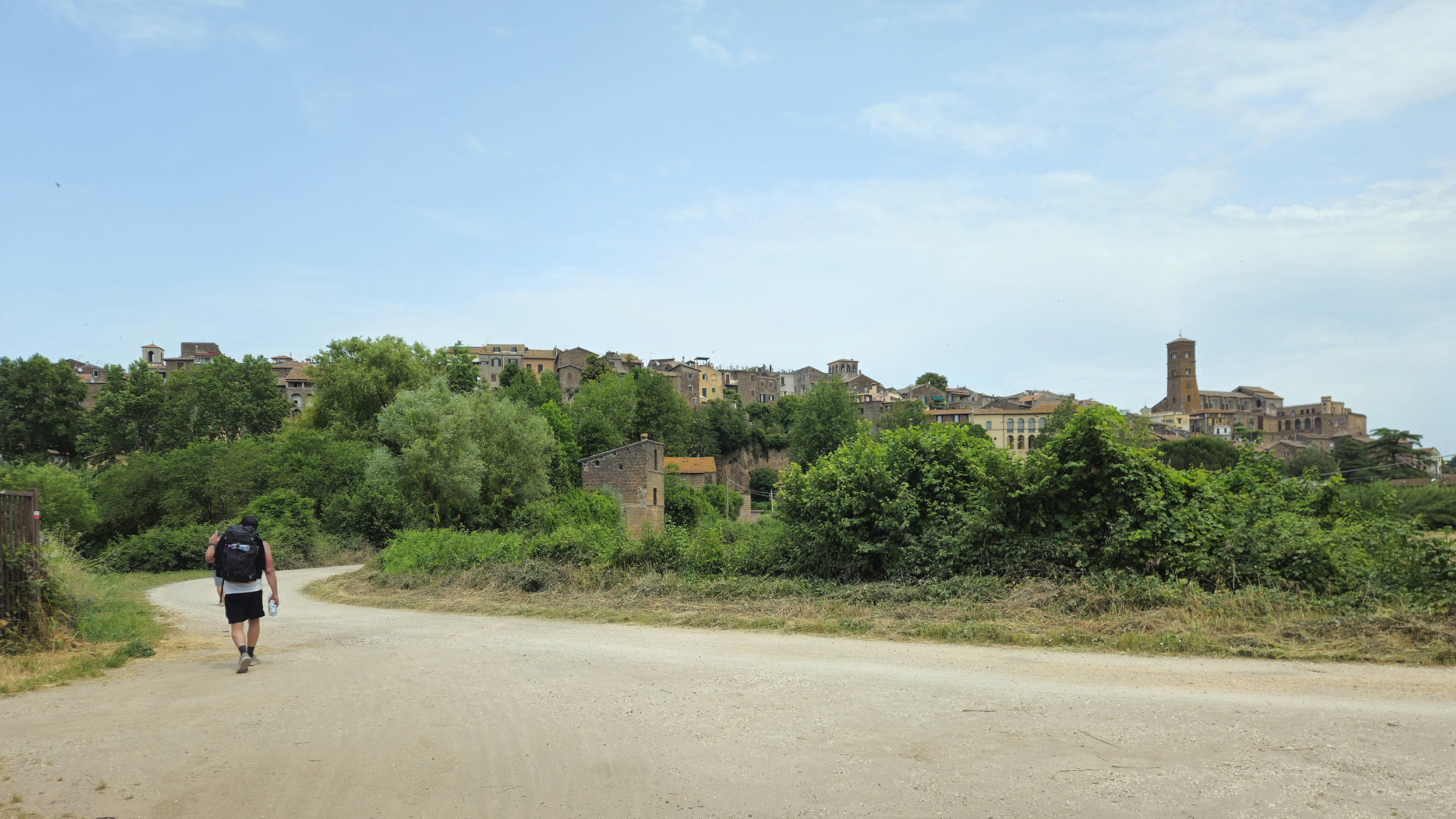
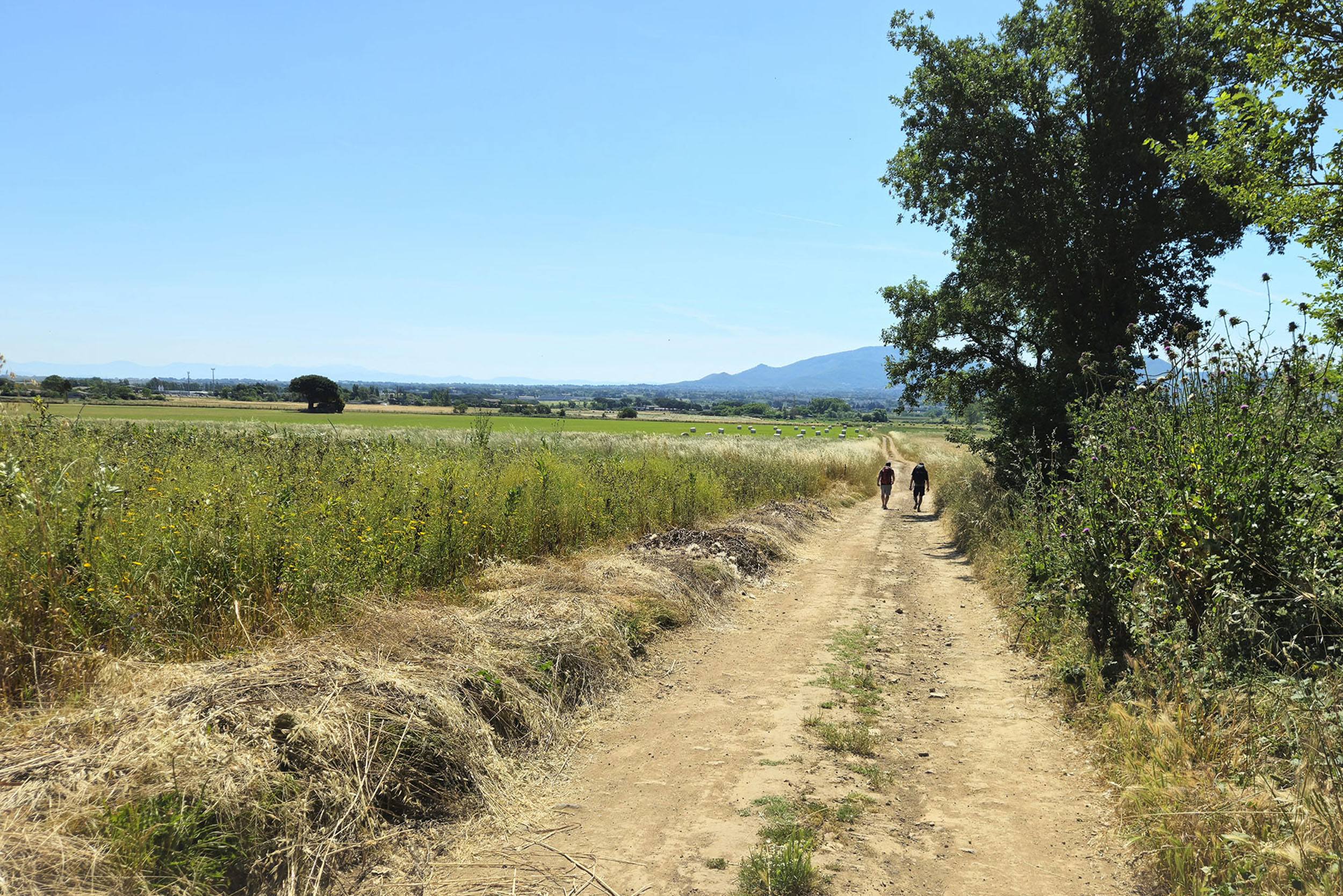
To celebrate my friend Wayne Jones’s 50th birthday, we completed the last section of the Via Francigena, trekking about 160 km from Acquapendente to Rome over 8 days. The landscape was stunning and varied, and the medieval towns along the way were captivating.
Surprises
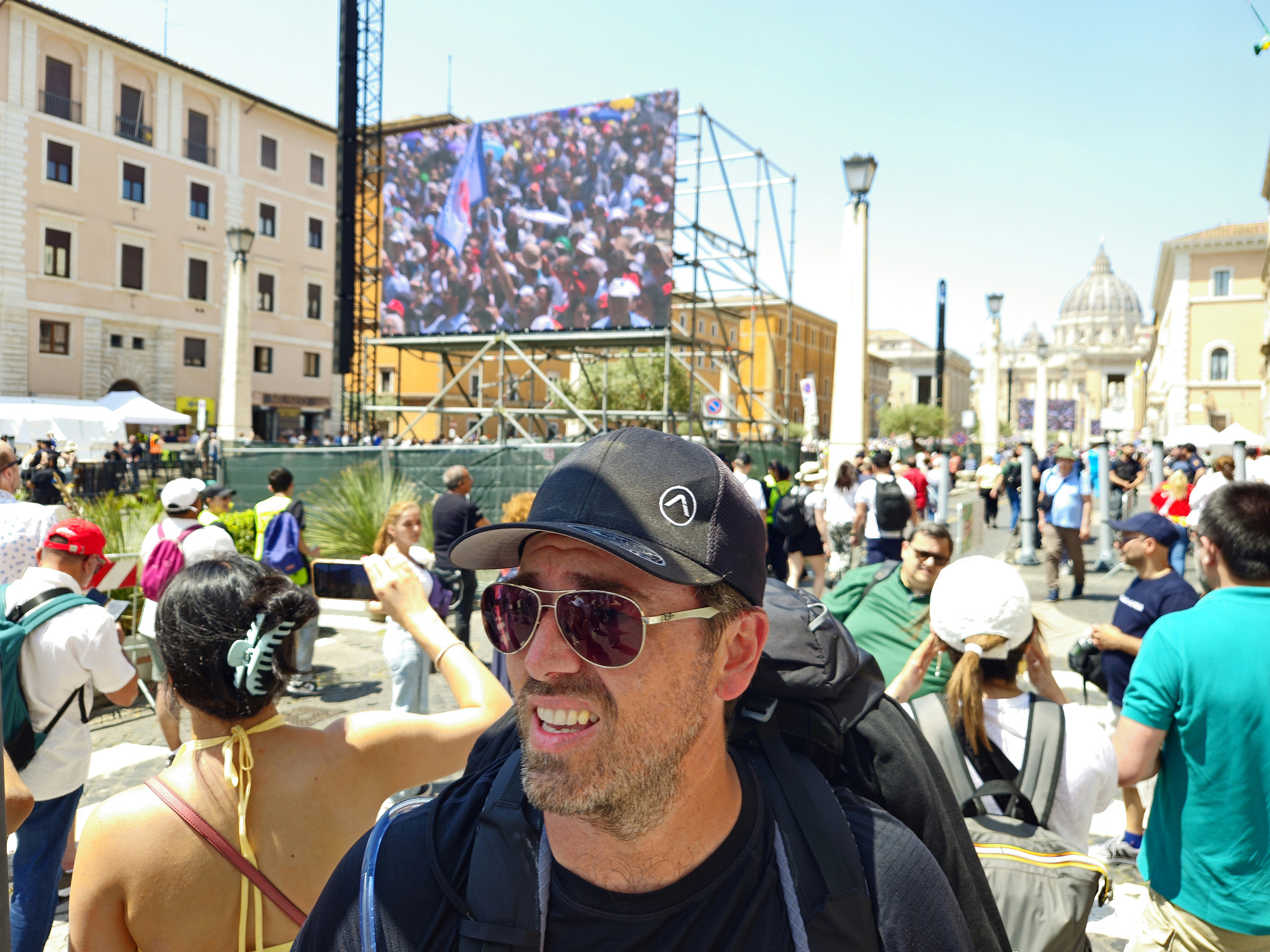
- The Francigena is physically challenging. Walking 20 km a day may not seem daunting, but carrying a pack in the summer sun, and with extra walking to explore in the evenings, we got up to 40,000 steps daily. We all got blisters. By the end, we were nearly limping into the Vatican.
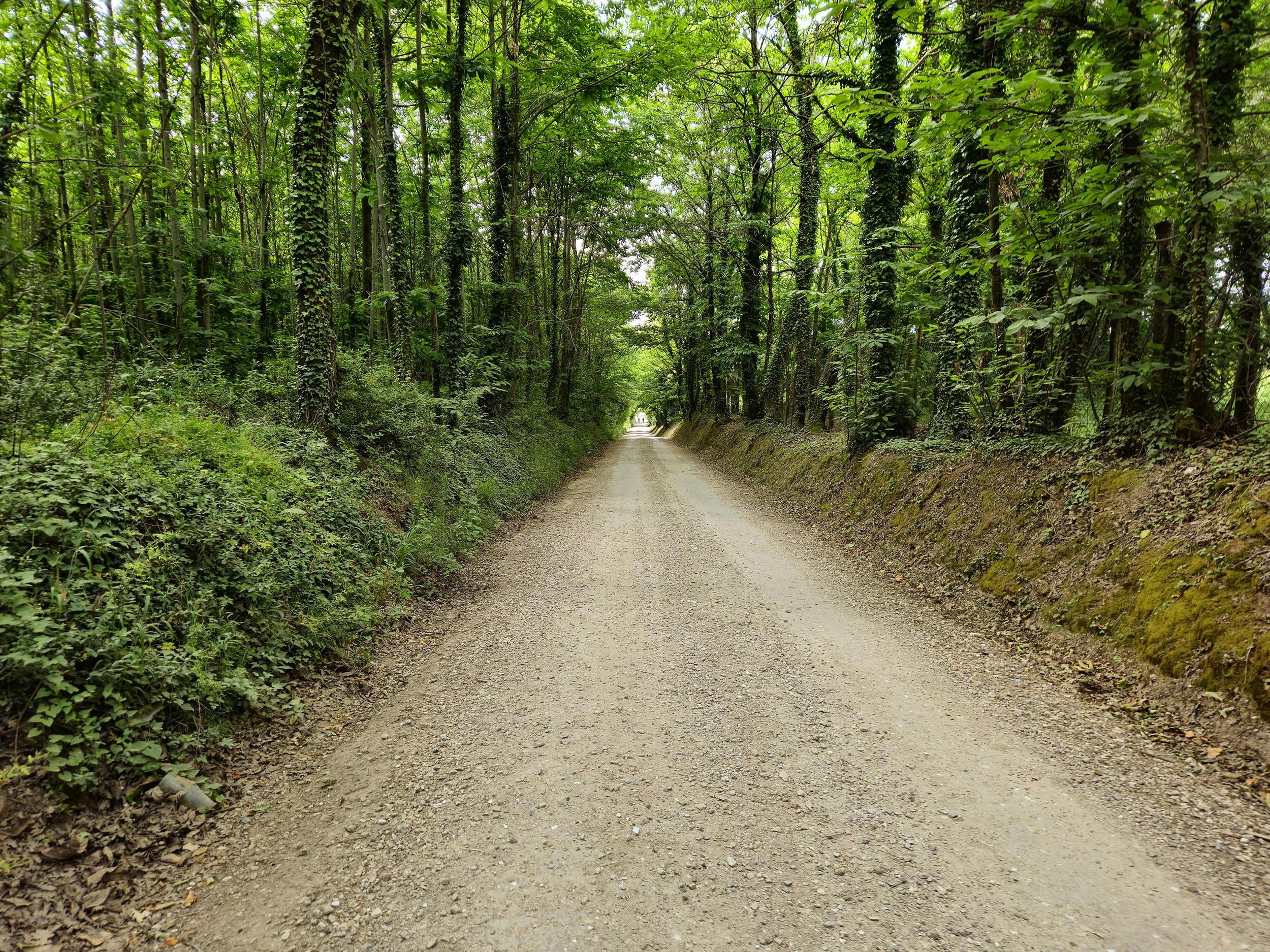
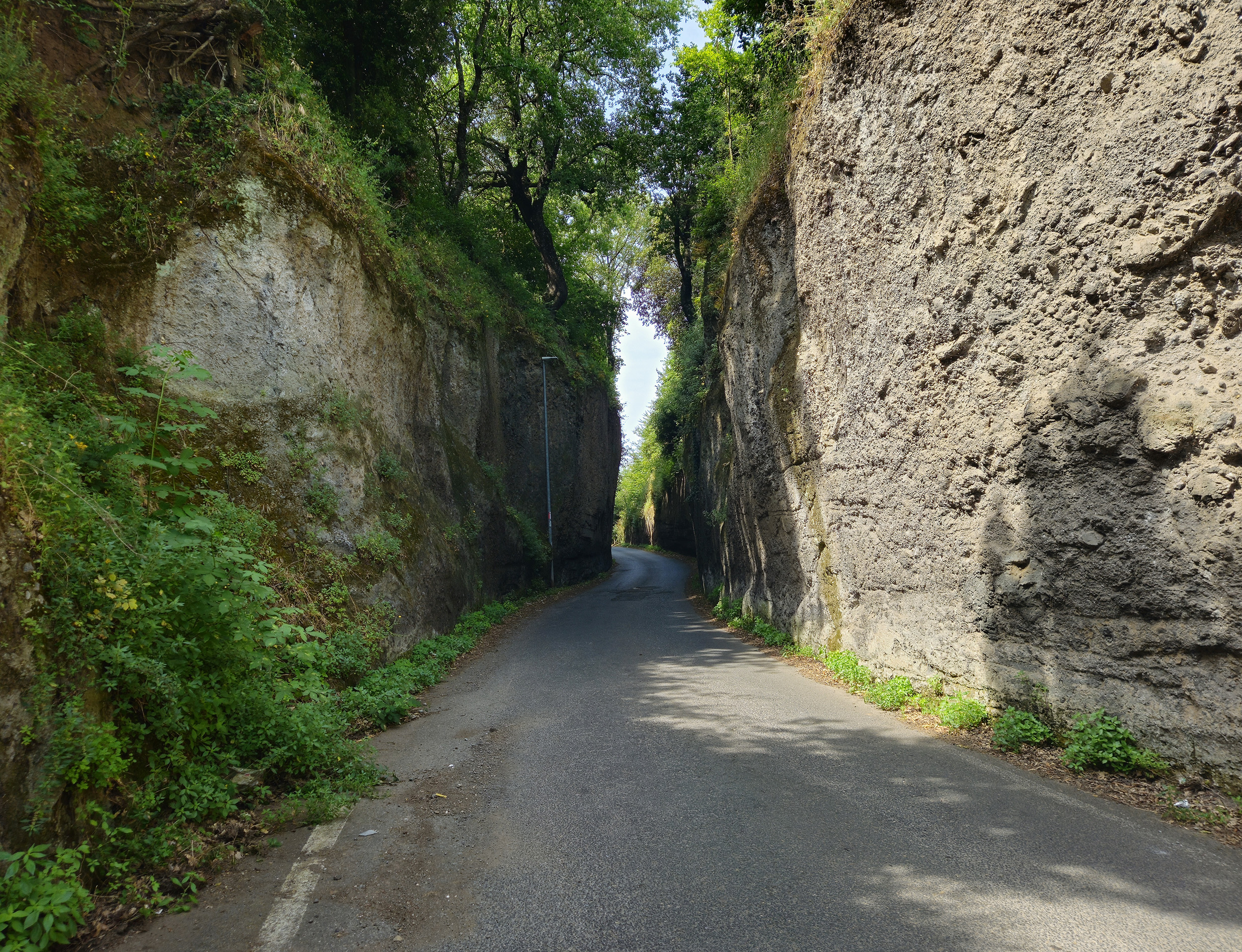
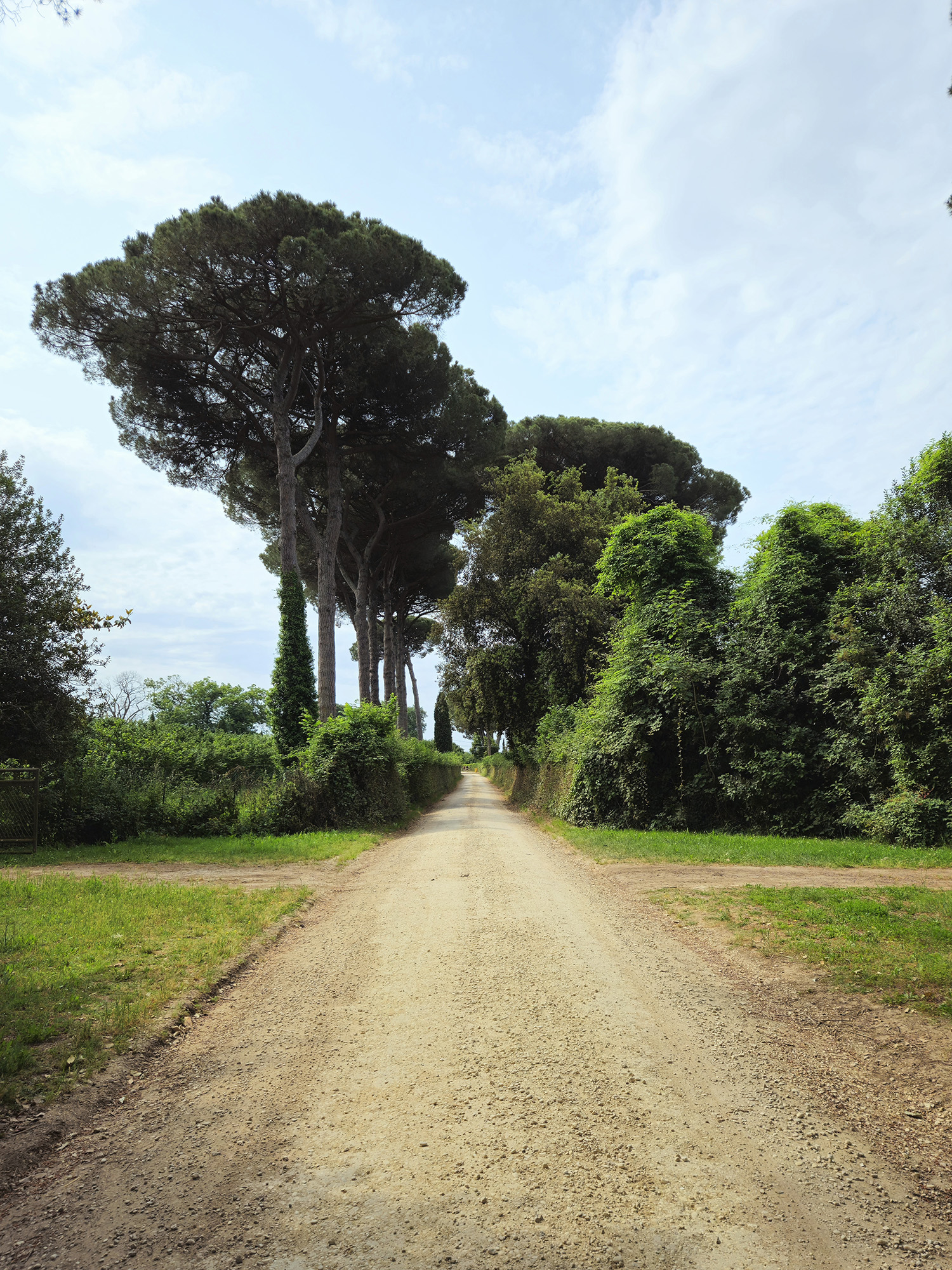
- The terrain varied from single tracks in the forest to cutting through hazelnut groves to stretches on the sides of highways. It was hard to guess what was coming next.
- It helps to know Italian. Not much English is spoken in the villages north of Rome. One even seemed to have a strong local dialect that wasn’t even standard Italian. On a few occasions, I’d be in a monestary office, trying to convey to the man at the desk in broken Italian that we needed beds for the night and maybe breakfast in the morning. The two months I spent with cramming Italian with Pimsleur before the trip were invaluable.
- Pilgrimage walks aren’t for everyone, but they are more real than cruises and tour buses. And I prefer them to multi-day wilderness hikes, because you’re only carrying 15 pounds – not all the camping gear. By mid-afternoon, you’ve landed in some amazing village with all the macchiatos, gelato, pasta and pizza you could want.
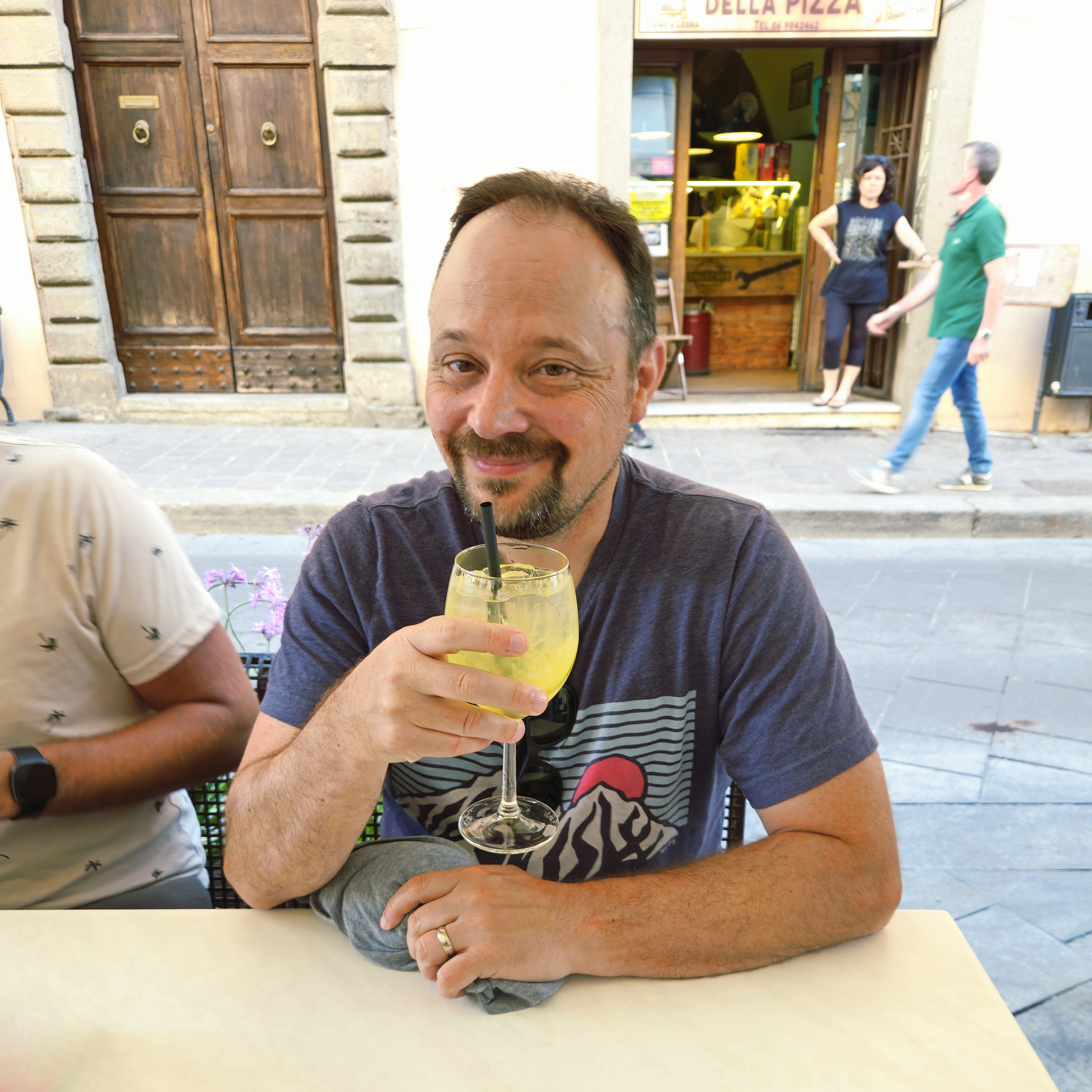
- The whole experience was a fantastic template for friendship. With seven or eight hours of walking each day, there was plenty of space to tell long stories, ask deeper questions and get to know fellow pilgrims. My travelling companions were hilarious and the inside jokes multiplied. But there were also profound moments and even tears.
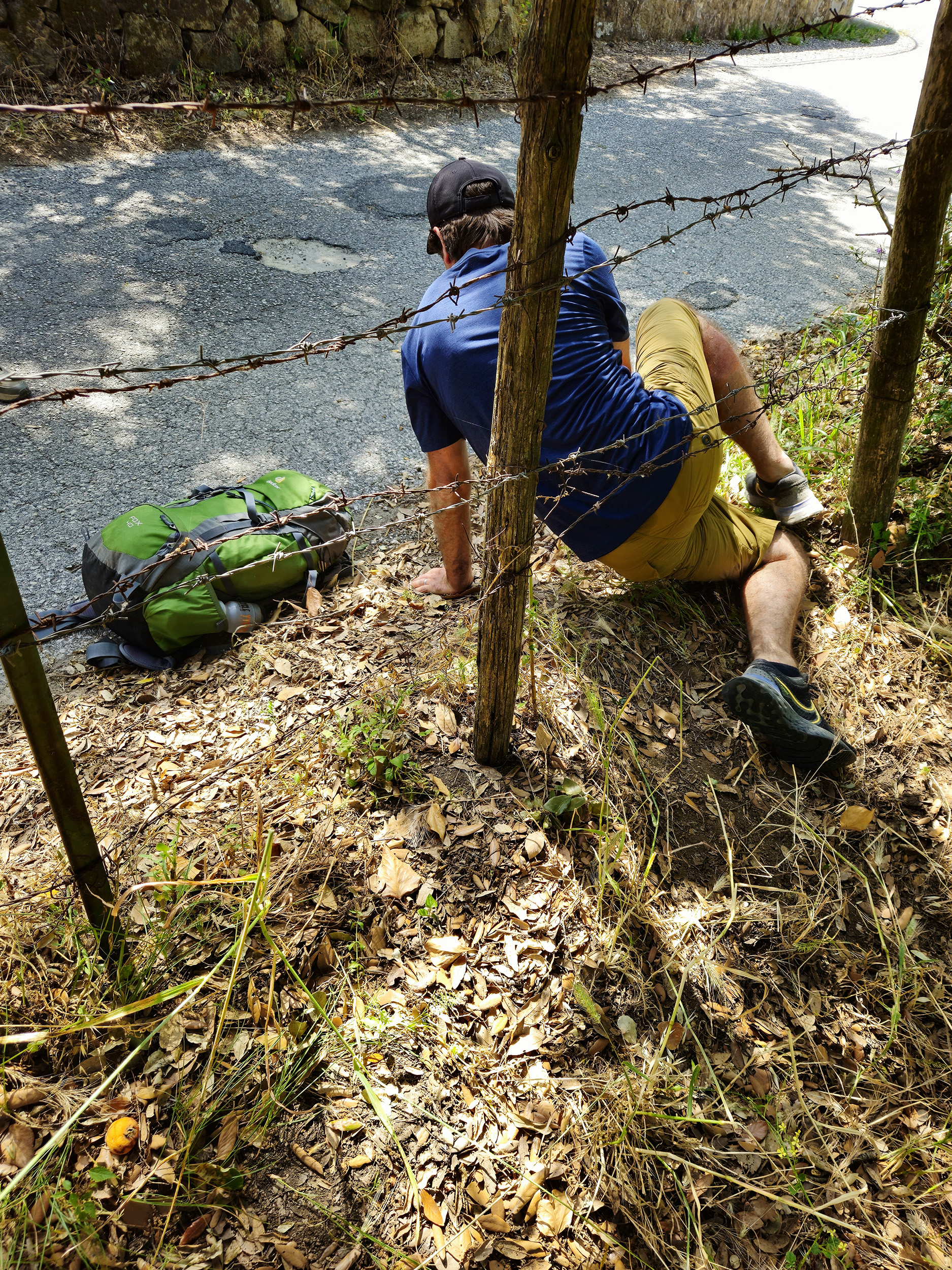
- Pilgrimages are a natural metaphor for life. There are ups and downs. Occasionally we got off track and once ended up in a pig pen. Then we kept having the best meal of our life every night. It helped to go through it all in community; we may not have made it otherwise.
- Walking for long stretches is also a tremendous invitation to slow down. NPR radio sometimes has musical interludes in between news segments, and the pilgrimage walk was similar to that: a complete break from the usual and a mental palate cleanser.
- I also have new appreciation for the nuns who serve pilgrims. Throughout the journey they housed and fed us, sometimes at no charge. At our final convent in Rome, we were invited to sit down in a semi-circle and one went around with a basin and towel, washing our sore feet. It was a profound moment, an imitation of Jesus. Looking down, I noticed that the woman who served me had a twisted foot herself. She probably had worse foot pain than me, yet here she was a ‘wounded healer’. Perhaps the things that wound us most can become the very way we best serve others.
Photo Gallery
Click any photo to start slideshow